Open MLIP pre-screening × mainstream-engine validation
Generic machine-learning potentials are cheap but charge-blind — they fail when extrapolating to constant-potential scenarios. High-accuracy first-principles computation is precise but costs weeks per system. Qcalc’s answer: put both into one agent pipeline — MLIP for high-throughput coarse screening, mainstream engines for refinement — balancing cost and credibility.
- ▸ MLIPs: MACE / DPA-4 open-source models for high-throughput screening
- ▸ Refinement: mainstream first-principles engines such as CP2K / ABACUS
- ▸ SLURM cluster scheduling · agent orchestration with auto-resume
- ▸ Industry delivery 6–12 months → Qcalc 5–10 days end-to-end (final timeline upon consultation)
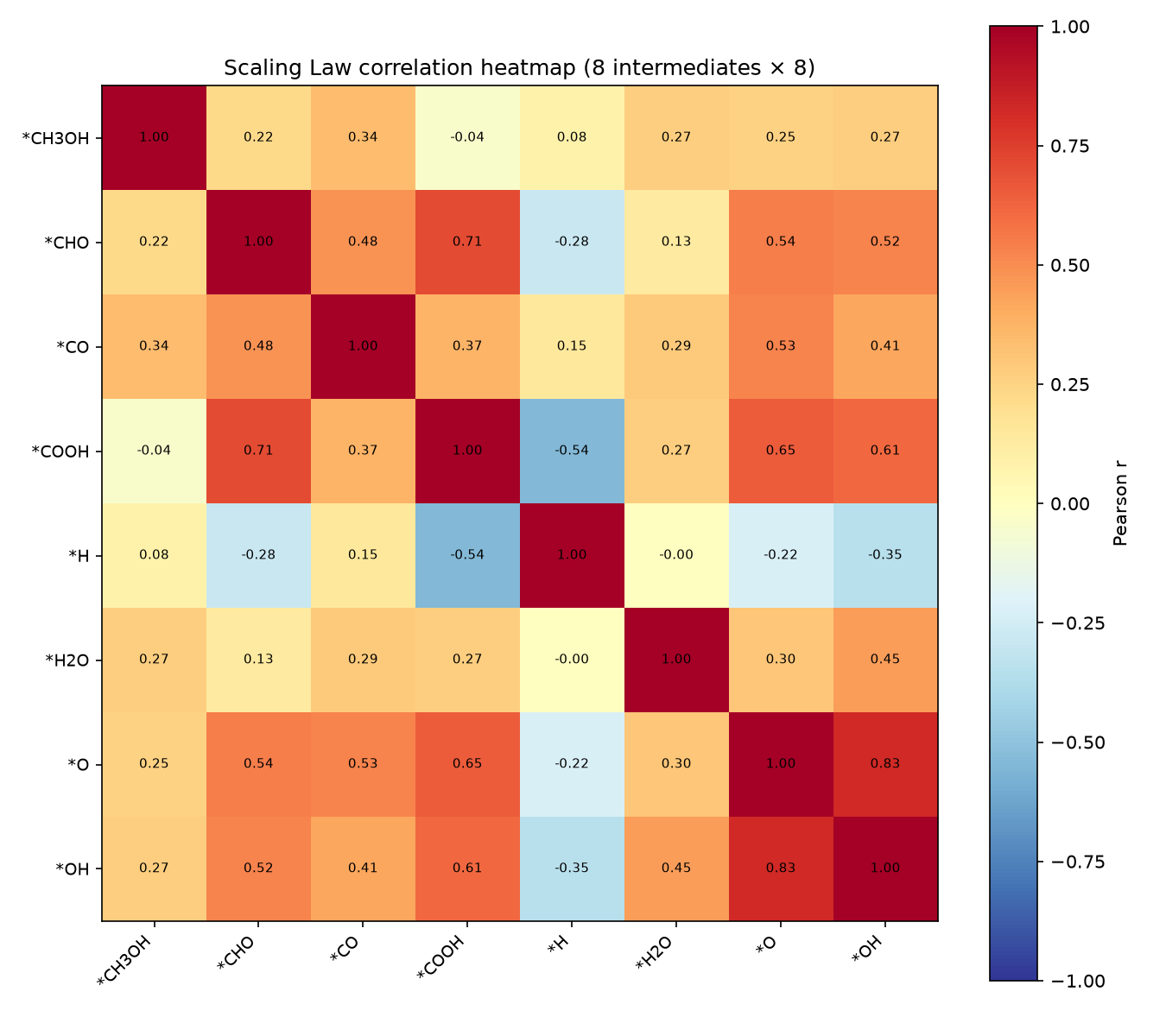
Sample output · adsorption-energy scaling heatmap (click to enlarge)
Five-agent relay + RSI recursive self-improvement
Each computing task is split across five specialist agents in relay; RSI then archives the experience rules with a dual-ledger audit — the shared evolutionary core of the Qcalc product matrix, getting sharper with every use.
Surface Scientist
Plan design
MLIP Optimizer
Fast screening
DFT Engineer
Cluster runs
Analyst
Figures
Report Officer
Report
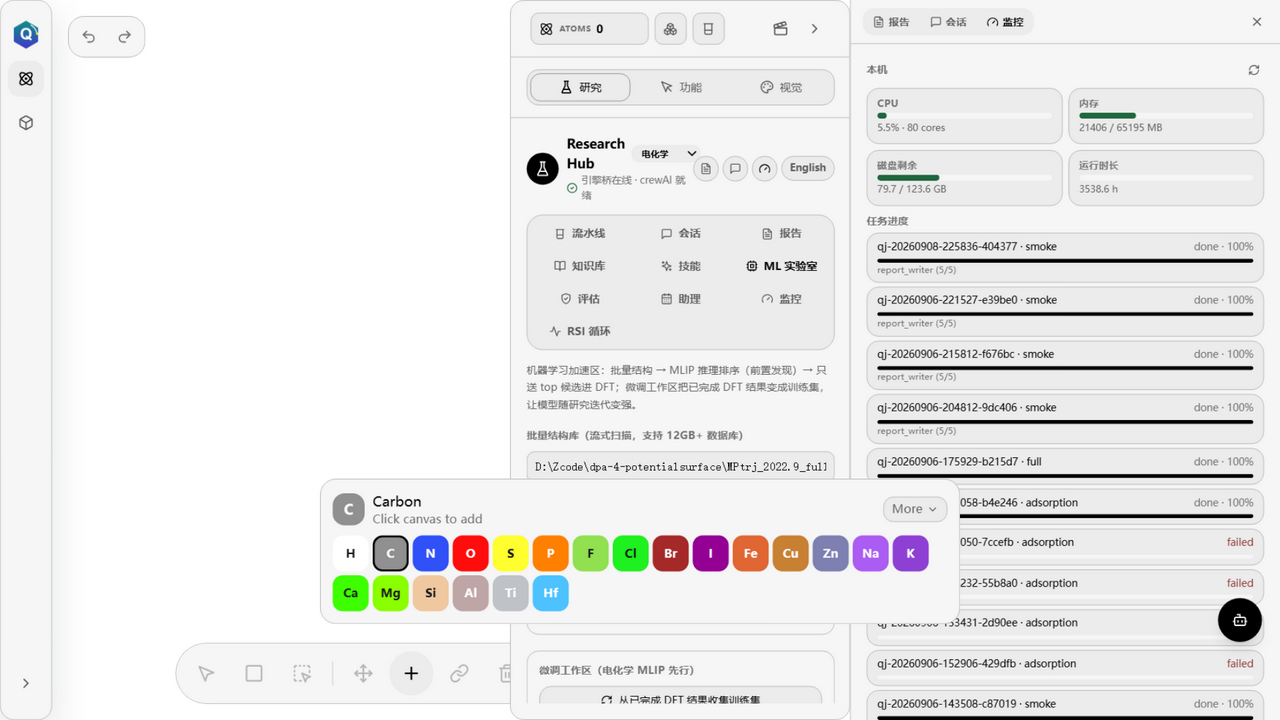
Q-nergy ML Lab · machine-learning laboratory (click to enlarge)
Every delivery trains the foundation model
Public datasets carry almost no constant-potential labels — the biggest wall for electrochemistry AI. Qcalc turns commercial delivery into data production: every completed order deposits structures and results back into the base. Each flywheel turn deepens the moat.
Public datasets
Near-zero constant-potential labels
Qcalc delivery
Every order deposits labeled data
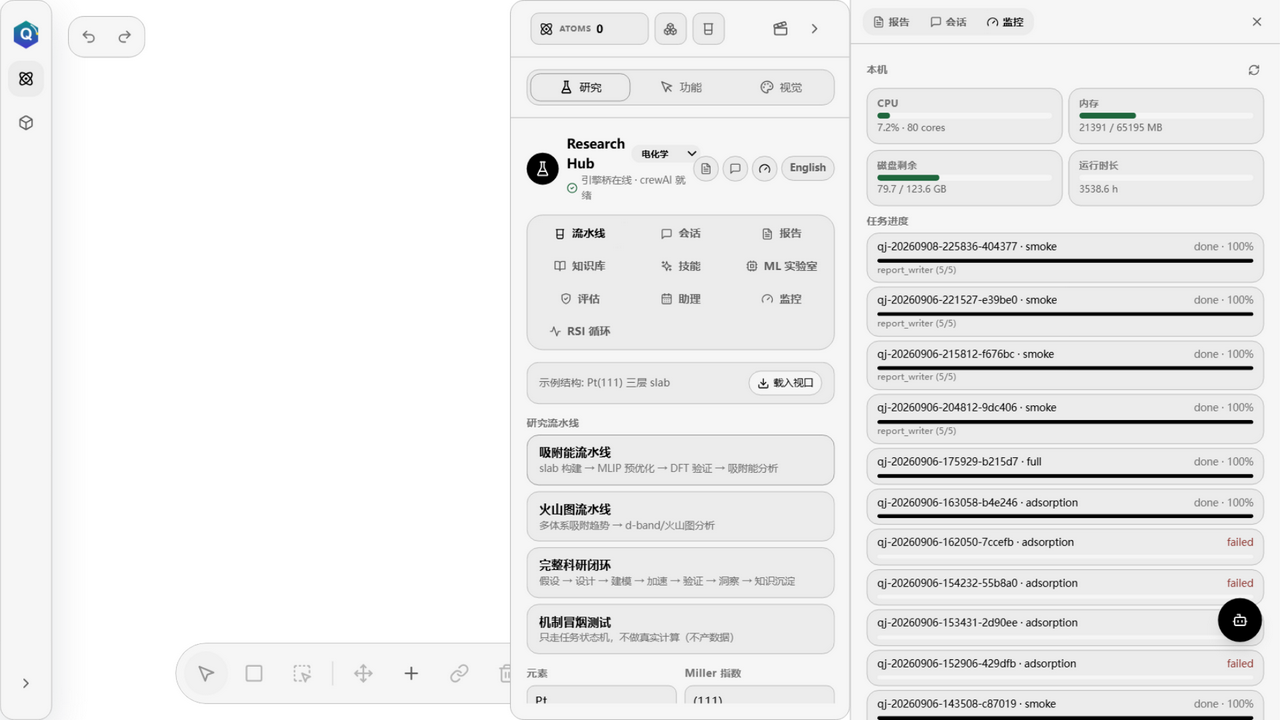
Delivery platform and workbench share one data base
The intelligent base toward constant potential
Charge-blind models never reach the double layer. Qcalc’s DFT-free route has two steps: first free electronic-structure computation from the traditional DFT workflow; then build the electrochemistry foundation-model framework (Q-electron, in development) on top.
Step 1 · Validated
DFT-free electronic-structure engine · 33 systems
Step 2 · In Development
Q-electron foundation-model framework · contact us
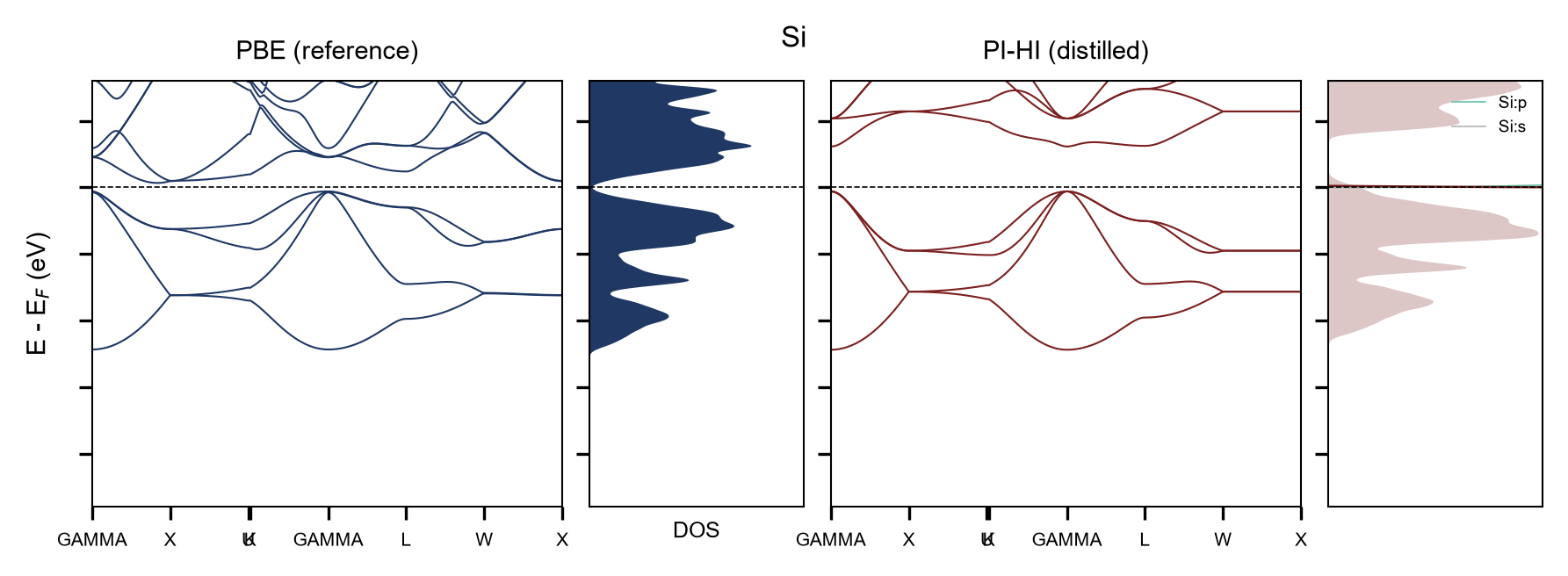
Silicon · DFT-free engine output vs. reference (click to enlarge)